Discover how community banks leverage AI in ATMs to prevent hardware failures, enhance the digital customer experience, and mitigate security risks effectively.
What Are the Risks of AI in ATMs?
Discover how community banks leverage AI in ATMs to prevent hardware failures, enhance the digital customer experience, and mitigate security risks effectively.
May 01, 2026 / By Katie Kuehner-Hebert
Discover how community banks leverage AI in ATMs to prevent hardware failures, enhance the digital customer experience, and mitigate security risks effectively.
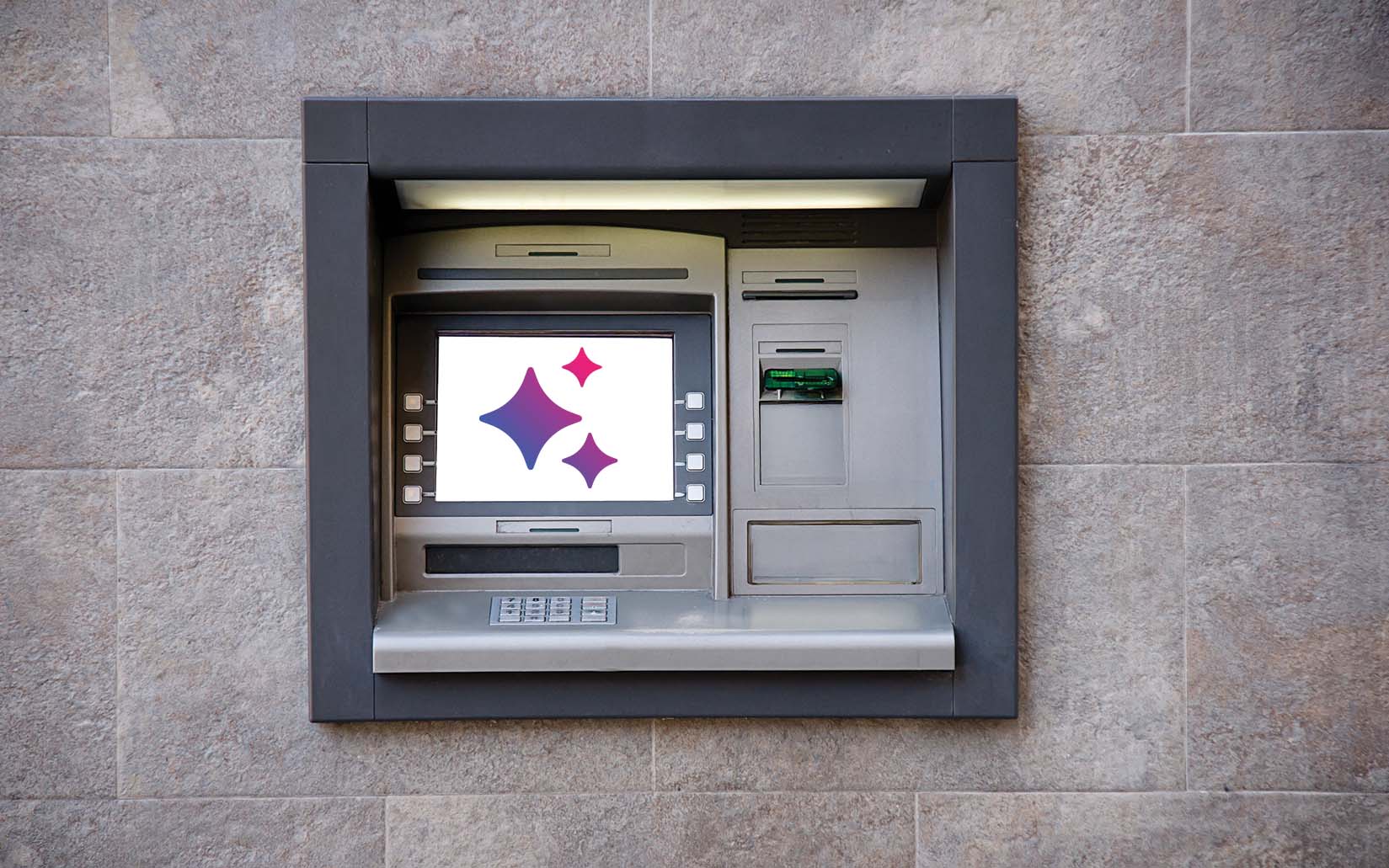
Artificial intelligence is being integrated across all bank functions—including within ATMs.
AI can help keep ATMs up and running, tailor the experience to individual customers and give banks better data about how the channel is being used, says Scott Anchin, ICBA’s senior vice president of strategic initiatives and policy. For community banks, that kind of intelligence can level the playing field.
“Community banks have always had an edge when it comes to knowing their customers,” he says. “AI at the ATM extends that relationship into a self-service channel that has historically been pretty impersonal. When the technology can adapt to how a customer actually uses the machine, it starts to feel less like a piece of hardware and more like an extension of the bank.”
Preventing ATM Failures Through Predictive Maintenance
For technology and services provider Diebold Nixdorf, AI-driven predictive maintenance is essential to always-on ATM availability, says Jodi Neiding, vice president of global banking hardware solutions for the North Canton, Ohio-based company.
Diebold Nixdorf’s DN AllConnect® Data Engine combines cloud connectivity, machine learning and AI to monitor device health, diagnose root causes and predict failures before they occur, Neiding says.
“This enables proactive service, resolving issues remotely or dispatching technicians with the right part, so banks can move from reactive repairs to self-healing operations,” she says. “The result is higher uptime, fewer disruptions and a more reliable self-service experience for consumers.”
Atlanta-based NCR Atleos is also modernizing ATM operations through an AI-assisted service platform they developed called Intelligent Diagnostics, which instantly analyzes fault data and provides prescriptive repair guidance with over 95% accuracy to reduce manual troubleshooting and improve first-time fix rates, according to Stuart Mackinnon, executive vice president and chief operating officer.
“AI overcomes the limitations of traditional predictive analytics by correlating multiple signals to forecast potential part failures and by optimizing technician dispatching to ensure the right resource arrives on the first visit, boosting availability and reducing repeat service calls,” Mackinnon says.
These capabilities are already delivering measurable impact for the ATMs NCR Atleos services, including a 13% global reduction in service revisits and a 50% decrease in North America tech support cases, he says.
Enhancing Customer Experience With Digital Integration
3 questions to ask vendors of AI-enabled ATMs
What data is being collected?
Where does that data go?
How is the AI making decisions?
Mackinnon says AI helps transform ATMs into dynamic digital access points for customers by enabling natural voice interactions, full audio-guided experiences and seamless authentication via voice. AI-powered digital humans can also address staffing challenges by offering guided, relevant prompts that personalize the experience and support customers more effectively, he says.
AI is transforming ATMs into intelligent, connected service points within a broader omnichannel ecosystem, Neiding says. Financial institutions are unifying digital, branch and self-service interactions through real-time data insights, personalization and seamless channel integration.
“AI can streamline routine transactions, anticipate customer preferences and enable expanded services such as video banking or account origination,” she says. “Combined with capabilities like cash recycling and managed services, AI-powered tools like cash forecasting improve efficiency and availability while elevating the user experience.”
Security Risks and Vendor Mitigation Strategies
However, the same AI tools that are improving ATMs are giving criminals new capabilities, Anchin says. More sophisticated fraud attempts are occurring across every channel, and ATMs are no exception.
“Any time you’re adding new technology and new connections to a device that handles financial transactions, you have to think carefully about what risks come along with that,” he says.
To neutralize these risks, banks need to ask the right questions of their vendors, like what data is being collected, where it goes and how the AI is making decisions, Anchin says. Examiners are increasingly focused on how banks manage technology risk, and that includes understanding the tools that third-party providers—including ATM vendors—are putting on the bank’s network.
“None of this should discourage community banks from exploring AI at the ATM, but you can’t let the excitement outrun your risk management framework,” Anchin says. “When criminals are using AI to attack, banks need to be ready to use AI to defend.”
The key is doing it thoughtfully, with strong vendor due diligence and policies that keep pace with the technology, he says.
Advanced Risk Detection and Fraud Prevention
Diebold Nixdorf’s AI-enabled ATM systems can recognize transaction irregularities like jackpotting by analyzing historical data, including transaction rates and volume ratios, to identify suspicious patterns, Neiding says.
“AI strengthens protection, supporting real-time fraud detection, anomaly monitoring and faster incident response across ATM networks,” she says. “These capabilities complement established safeguards such as anti-skimming technology, biometric authentication and secure cloud connectivity.”
NCR Atleos’ AI-powered video analytics can detect abnormal or malicious behavior in real time—such as a car backing toward an ATM, hand movements consistent with installing a skimmer or signs a customer may be under duress. This allows the system to trigger alarms or protective countermeasures proactively, Mackinnon says.
“AI in self-service banking doesn’t introduce new risks so much as extend existing ones,” he says. Banks have always managed concerns like data privacy, system reliability and fraud prevention, and AI simply adds new security layers—such as biometrics—to frameworks already in place.
“With proper safeguards, policies and leadership oversight, AI becomes an evolution of current digital strategies rather than a disruptive shift,” Mackinnon adds. “The same principles used for any new banking technology still apply: transparency, fairness, strong governance and maintaining human oversight.”
Katie Kuehner-Hebert is a writer in California.
Subscribe now
Sign up for the Independent Banker newsletter to receive twice-monthly emails about new issues and must-read content you might have missed.
Sponsored Content


Featured Webinars


Join ICBA Community
Interested in discussing this and other topics? Network with and learn from your peers with the app designed for community bankers.
Related Articles
2026 Banking Trust & Technology Outlook: What Community Bank Leaders Need to Know
CybersecurityCompliance & Risk
Driving Community Prosperity with Reciprocal Deposits
Retail BankingDigital Banking

Playing Under Par: Bond Portfolio Strategies for Community Banks
GrowthInvestment and Insurance

Do Paper Checks Have a Future?
Retail BankingPayments
Subscribe Today
Sign up for Independent Banker eNews to receive twice-monthly emails that alert you when a new issue drops and highlight must-read content you might have missed.
News Watch Today

Join the Conversation with ICBA Community
ICBA Community is an online platform led by community bankers to foster connections, collaborations, and discussions on industry news, best practices, and regulations, while promoting networking, mentorship, and member feedback to guide future initiatives.
Join the Community Example Text