Customer hostilities can cause stress for a community bank’s staff. Try these tips to calm the storm and maintain great customer relationships.
3 Ways to Cool Down Hot-Tempered Bank Customers

Customer hostilities can cause stress for a community bank’s staff. Try these tips to calm the storm and maintain great customer relationships.
Photo by BrAt82/Adobe
September 01, 2026 / By Mindy Charski
Customer hostilities can cause stress for a community bank’s staff. Try these tips to calm the storm and maintain great customer relationships.
Do you suspect customers are getting angrier and more vocal about their frustrations? You’re not alone. More than half (55%) of Americans believe customer incivility is increasing, and 15% admitted to acting uncivilly toward a business in the past year, according to the 2025 National Customer Rage Study by Customer Care Measurement & Consulting and Arizona State University’s W. P. Carey School of Business.
There are a few possible reasons for this. Stress can cause customers to act differently, says Victor Pierson, chairman, president and CEO of $1.6 billion-asset Moody Bank in Galveston, Texas. He’s seen hostility rise after a hurricane hits, for instance, but he also notes that the rhetoric on social media and in email is “more difficult” now than in the past. “Things are just a little more volatile than they used to be,” he says.
COVID might have played a role, too. Chris Funk, president of $300 million-asset DLP Bank in Starke, Florida, says, “I think that when societal norms changed, and people spent more time with themselves, and their world was more disrupted, they picked up some habits or tendencies that have been hard to shake post-pandemic.”
Today, even the friendliest community banker might encounter a customer who is riled up about a hold on a check, a closed account or another banking issue. Frontline workers who successfully defuse situations can reduce the chances that angry customers move their accounts, complain to regulators or, even worse, create an unsafe situation.
In addition, managing interactions well—including those that play out publicly on social media—can help bankers preserve or even boost their institution’s reputation.
Here are some strategies Pierson and Funk recommend for dealing with hostile customers.
Listen attentively and empathize
Neither executive says customers are always right, but Funk notes that their concerns, misunderstandings or frustration are all valid to them. That’s why the process of cooling down an angry customer who calls or visits a branch should start with good listening.
“If people can get [a grievance] off their chest,” Pierson says, “they feel better about it, especially if they feel that our team member is listening and trying to understand the situation and doing their dead-level best to help them.”
Being sensitive to customers’ feelings is also important. “A lot of times, you don’t know what the particular customer is going through in their own personal or business lives,” Pierson adds. “So, if you deal with them with honesty and empathy, they often come around, and the hostility is taken down several levels, where you can get to the root cause of the problem and then deal with it.”
Funk suggests speaking in a “warmer, slower tone” and avoiding legalese about policies or procedures. Instead, use phrases like, “I’m so sorry,” “I completely understand why you would be frustrated” or “I’m surprised to hear that. I’m interested to learn more.” Restating the issue can also help customers feel heard.
Ideally, an initial conversation with a customer-facing employee can help resolve an issue, but Funk says DLP Bank doesn’t try to dissuade people from speaking with a supervisor when it’s warranted.
“It’s counterintuitive, but it’s almost magical when they know it’s not a problem to talk to the manager,” he says.
Address issues swiftly
55%
of Americans believe customer incivility is increasing
Source: 2025 National Customer Rage Survey
Once you understand the underlying problem, act fast.
“We will try to get it resolved as quickly as possible,” Pierson says. “It may not always be to the satisfaction of the customer, but we deal with it head on and do not let it linger.”
DLP Bank tries to resolve issues on the spot, but when that’s not possible, Funk says employees make a commitment about response time. He offers an example: “By 2:30 p.m., I’m going to call you back, and hopefully I’ll have an answer for you. But if not, I’ll let you know where I’m at with that.”
Speed is also important when a disgruntled customer shares their frustration on social media. DLP Bank has learned that “a good or a [reasonably] quick response is far better than a slow, perfect response,” Funk says. Anger can build as people wait for their concern to be addressed, so the bank will reach out to try to continue the conversation offline.
Embrace the silver lining of irate customers
The upside of upset customers? Businesses can only solve problems they know about. Plus, Funk says community banks that handle a situation well can potentially turn angry customers into more loyal ones.
In that spirit, several days after an issue with an upset customer has been resolved, DLP Bank will make a follow-up call to check in.
“A hostile customer really isn’t our adversary,” Funk says. “They’re customers who are passionate, and they’re coming to us with a problem and making sure that we understand it. So … we look at it as an opportunity.”
Mindy Charski is a writer in Texas.
Subscribe now
Sign up for the Independent Banker newsletter to receive twice-monthly emails about new issues and must-read content you might have missed.
Sponsored Content

Featured Webinars


Join ICBA Community
Interested in discussing this and other topics? Network with and learn from your peers with the app designed for community bankers.
Related Articles
Examiner-Ready CECL: What the OCC's 2026 Handbook Update Changes
BankingEducation and Training

What 1,100 Consumers Told Us About Banking
Digital BankingIndustry Outlook

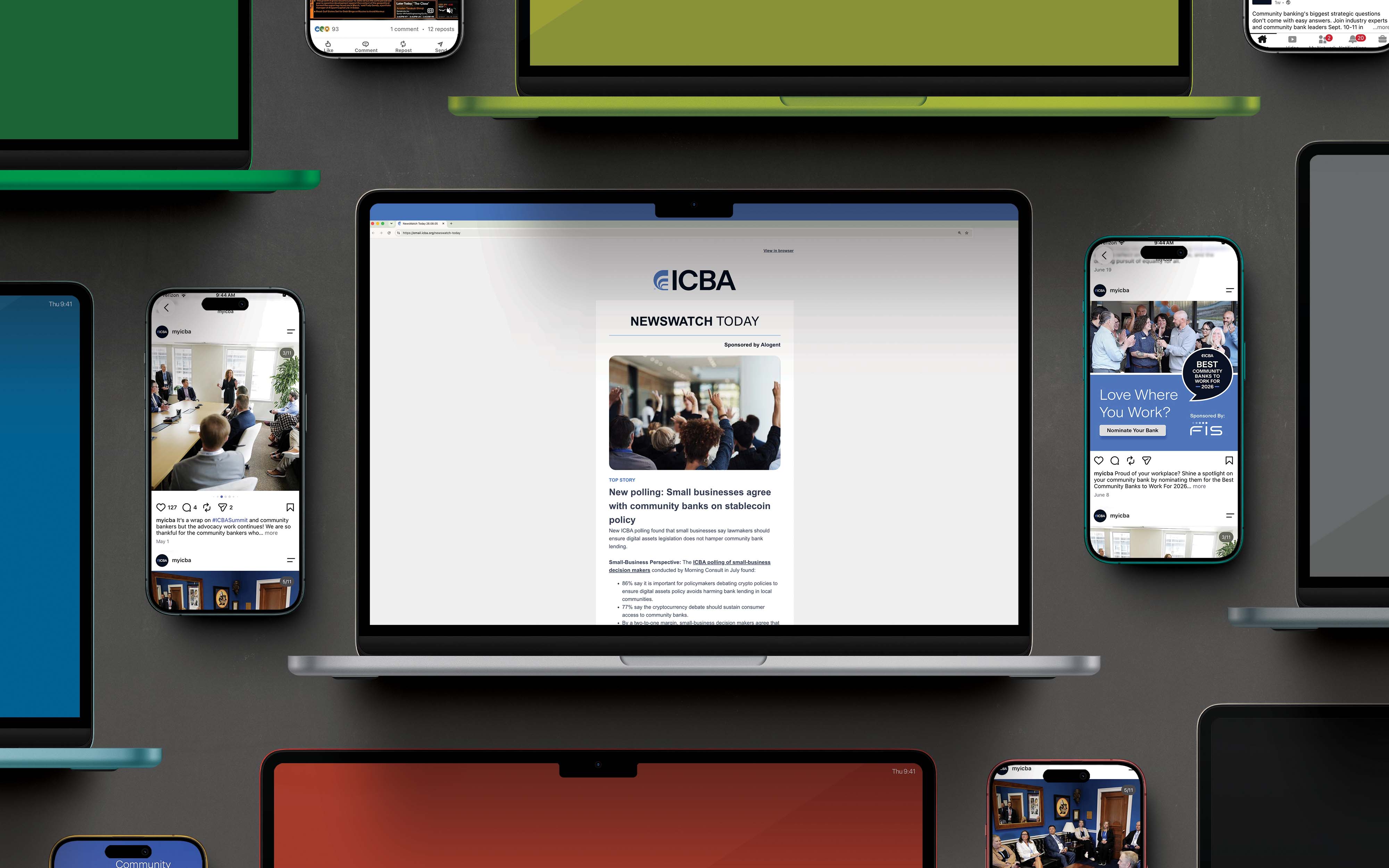
This Is How ICBA Keeps Community Bankers Informed
PeopleEducation and Training
Subscribe Today
Sign up for Independent Banker eNews to receive twice-monthly emails that alert you when a new issue drops and highlight must-read content you might have missed.
News Watch Today

Join the Conversation with ICBA Community
ICBA Community is an online platform led by community bankers to foster connections, collaborations, and discussions on industry news, best practices, and regulations, while promoting networking, mentorship, and member feedback to guide future initiatives.
Join the Community Example Text