From cleaning up after a devastating tornado to packing backpacks for students, this year’s National Community Bank Service Award winners give back to their communities in ways both big and small.
Meet the Winners of the ICBA National Community Bank Service Awards 2026
From cleaning up after a devastating tornado to packing backpacks for students, this year’s National Community Bank Service Award winners give back to their communities in ways both big and small.
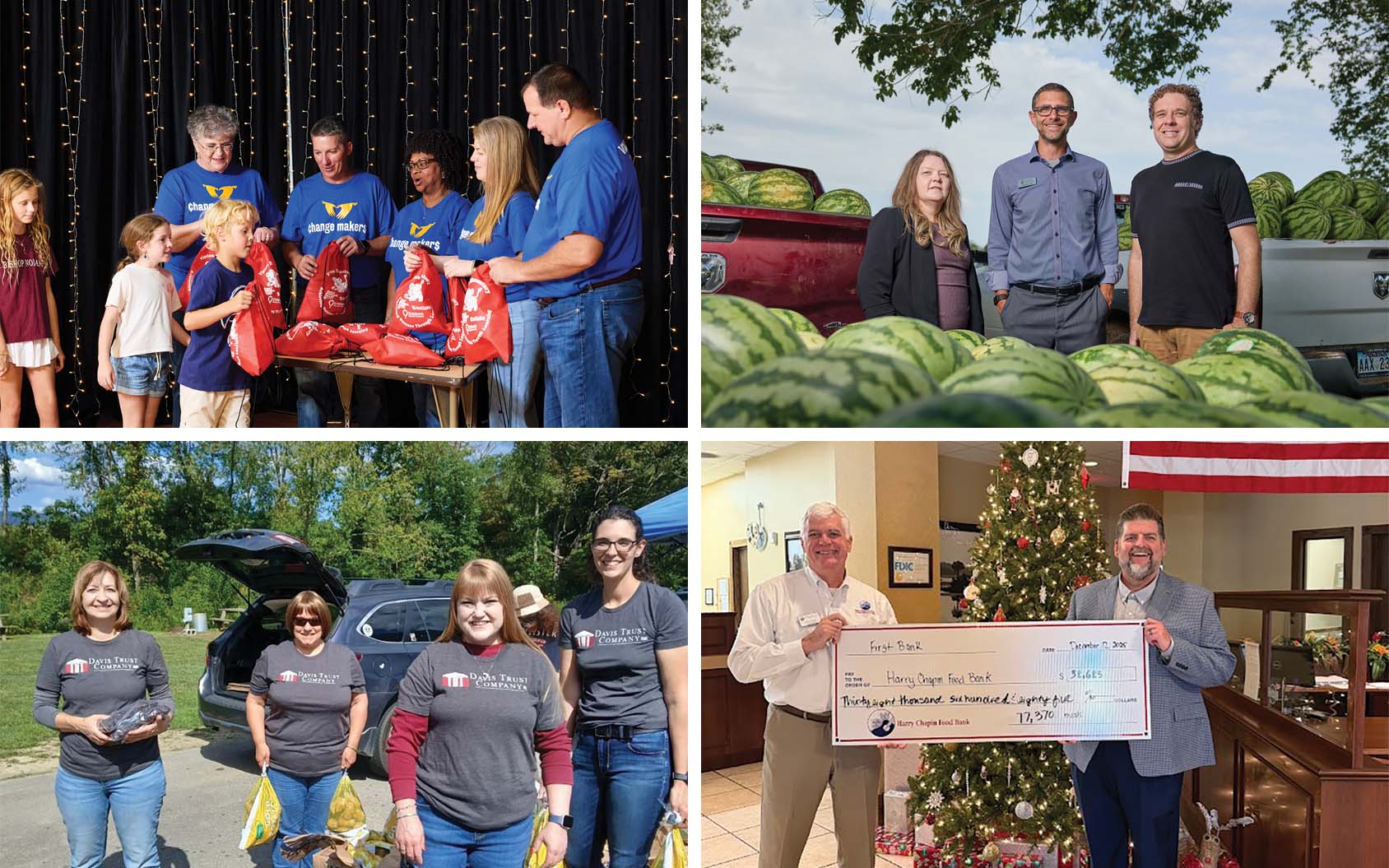
Each 2026 National Community Bank Service Award winner has made a mark on its community. | Clockwise from top left: Emerging winner First Federal Bank of Louisiana; Exceptional winner Bank of Cave City; Emerging honorable mention First Bank; Exceptional honorable mention Davis Trust Company
September 01, 2026 / By Roshan McArthur, Katie Kuehner-Hebert and Judith Sears
From cleaning up after a devastating tornado to packing backpacks for students, this year’s National Community Bank Service Award winners give back to their communities in ways both big and small.
Exceptional winner
Awarded to a bank that developed its service program three or more years ago
Silver linings in the storm
Staff at the Bank of Cave City stepped up to provide relief after a tornado devastated the community.
By Roshan McArthur
On March 15, 2025, an EF3 tornado hit Cave City, Arkansas. Winds up to 165 mph swept through in the dead of night, collapsing the cell tower, hitting 50 homes and demolishing 25, destroying both local fire stations and affecting 20 businesses.
Jonas Anderson, mayor of the 1,900-resident town, had never seen anything like it. “I’ve grown up here, and we’ve had some close calls over the years, but we had never taken a direct hit from a tornado like that,” he says. “It didn’t wipe out a huge segment of the community, thankfully, but the path that it took destroyed what we’ve come to call our ‘only list.’ It knocked out our only grocery store, our only dentist office, our only funeral home, our only auto parts store.”
The Bank of Cave City, one block from the tornado’s path, survived, and the community bank’s team, many of whom were personally affected by the storm, sprang into action.
“From the bank’s perspective, the first thing was making sure that the bank was secure and able to provide the banking services that people need,” says Anderson, who also serves as chief technology officer for the $190 million-asset bank. “Beyond that, we had a lot of people who didn’t have a home or a business, and they needed to be fed and taken care of, and we had a lot of that going through the bank, too.”
Communications were down and the power was out, but the bank’s team dug through the wreckage of their storage building, pulled out their grill, utensils, chairs and tents, and started feeding the community.
The tornado hit on Friday night. On Monday, the Bank of Cave City was open. And for the next few weeks, as the town waited for power and communications to return, the team pitched in wherever they could.
A volunteer culture
The Bank of Cave City has been showing up since it was founded in 1906. “The bank has ... always been very involved in the community,” says Anderson.
In 2009, John Beller, now the bank’s president and CEO, was looking for a way to structure an incentive program for the team and decided to base it on volunteer participation.
“In the beginning,” he recalls, “we [focused] on specific projects that we asked everybody to get involved in. Over the years, we’ve allowed it to become ... more about what individuals are really passionate about.”
That can mean beautifying a park, building a float for the parade at Cave City’s legendary watermelon festival or coaching soccer at the local high school, Beller’s own passion.
“We identify our mission as empowering our neighbors to flourish,” he says. “A lot of times, an organization might act out of its own interest first, which is totally normal. But ... we try to pay attention to what our community needs and figure out how we can serve that need.”
The incentive program, called “We Live Here Too,” is a success. “People go way beyond the minimum that qualifies for the incentive,” Beller says.
For Crystal Crow, the bank’s marketing director, it’s all about looking for the “sparkle” in a team member’s eyes when you talk about helping the community. What’s their passion? What’s their purpose? Then, she directs their attention to it.
Customer service representative Isabelle Hooker found her sparkle with The Call, a program that works with foster children and families.
“I was a foster child when I was younger,” she explains. “It’s just so meaningful that I’m helping these kids know that there is love in the world.”
Building back stronger
On the night of the tornado, Beller’s home was hit and his farm destroyed. It was, he says, “personally devastating.” But what he remembers most is the number of people who showed up, offering a chainsaw, or in the case of his pastor’s wife, spending days on her knees picking up shards of glass from his yard so his kids could play safely.
During the tornado, Hooker and her family took cover in their cellar, but when the storm passed, they found their neighbor’s huge oak tree had fallen across the cellar door. Though they were able to get out, their front door had been destroyed, leaving a direct view into their living room, and the air smelled strongly of gas.
“We had two walls left,” she says. But by Monday morning, she was back at work. “I couldn’t just stare at the rubble. So, I came to work and stayed with the teller line. We gave out food. We were checking on neighbors, we were running supplies, we were feeding everyone. It kept me from completely spiraling.”
Today, her home has been rebuilt, and Cave City is well on its way to a full recovery. “I think resilience is built in ordinary days,” says Crow. “You do things on a daily basis or at the yearly events. And then when you really need the help, your people are there, they’re involved. ... And that’s how we recovered as well as we did.”
Emerging Winner
Awarded to a bank that developed its service program less than three years ago
It’s in the bag
First Federal Bank of Louisiana’s Backpacks of Hope program brought in thousands of food and hygiene items for local students.
By Katie Kuehner-Hebert
First Federal Bank of Louisiana in Lake Charles is known for supporting many philanthropic endeavors in its communities. But in 2024, the $1 billion-asset community bank wanted to create an annual flagship program “that makes the biggest impact possible,” says Erica McCreedy, assistant vice president of marketing and community impact manager.
The result, Backpacks of Hope, gets food and hygiene essentials to economically disadvantaged students at the start of each school year.
“These students may only have a nutritious hot meal when at school,” McCreedy says. “We saw a need and decided that we could do a program that was really transformative.”
In its inaugural year, First Federal chose Fairview Elementary School in Lake Charles, where the vast majority of the 600 students are economically disadvantaged. The community bank partnered with Children’s Miracle Network and LyondellBasel, a petrochemical company with a plant in Westlake, Louisiana, to help with donations, assembling the backpacks and delivering them to students.
Bank employees were invited to donate the food items, with the community bank purchasing whatever items were still needed, McCreedy says. Hygiene products included in the backpacks ranged from toothbrushes and deodorant to hand sanitizer and lotion.
Making giving fun
First Federal hosted interdepartmental and branch competitions to see who could bring in the most donations, McCreedy says. That “friendly rivalry spread enthusiasm throughout the bank” and turned the project into a bank-wide movement, she says.
That first year, more than 10,800 food items were collected, and more than 8,000 hygiene items were either donated or purchased. First Federal’s Change Makers volunteer team coordinated the assembly and delivery of the backpacks.
“We bought drawstring backpacks and custom made them with the school mascot, our bank logo and the logos of our partners,” McCreedy says. Inside each backpack was about 15 to 20 snack items and about 12 to 15 hygiene items.
John Paul Timpa, First Federal’s assistant vice president and risk manager, was one of many who volunteered to assemble the backpacks in the bank’s conference room.
“The bank gets involved with a number of great initiatives as a way to give back, but this particular initiative pulled on my heartstrings,” Timpa says. “Many of these kids don’t have access to proper food except at school. That First Federal has been able to rally the troops, gather these resources and give these kids such a generous offering of snacks and hygiene supplies to improve quality of their lives as they navigate their educational year—it’s a blessing to be a part of it.”
Timpa is especially impressed with how well-organized the program is.
“I’m extremely proud of what we put together,” he says. “It’s fully backed by the executive management and the board, and so many employees want to be a part of the events. More signed up than what was needed, and that’s a great problem to have.”
Excitement on distribution day
All 600 students at Fairview Elementary School were given the custom-designed backpacks on their first day of the 2024-25 school year.
For the 2025-26 school year, Cypress Cove Elementary School in Carlyss, Louisiana, was the beneficiary. Its 425 students, the majority of whom are economically disadvantaged, received more than 7,800 food items donated by bank employees and more than 5,000 hygiene items contributed by Westlake Chemical, a new industry partner.
“The bank’s process of giving out the backpacks floored me,” says Cypress Cove’s principal, Maranda Lanham. “We were worried that we would have to pull off giving all the kids backpacks at the same time we had to [handle dismissal of the students]. But the volunteers came with wagons, and we were able to completely hand out the backpacks to everyone in [20] minutes.”
Both the kids and the school’s staff were astounded that every one of the students received the backpacks, Lanham says.
“Oh my goodness, the excitement!” she says. “Those backpacks were overflowing—full of stuff. The kids were super pumped that everybody got backpacks.”
The kids really liked the snacks, and many brought one to school every day for several weeks.
“Our kids are the sweetest little people, and they were very appreciative,” Lanham says. “I feel they were starting the school year with the right positive feeling. They knew that their parents and their teacher cared for them, but now they saw that people in their community also cared for them.
“The community truly showed up—it wasn’t just words,” she adds. “It made the kids feel loved and valued and ready to tackle the new school year.”
Across both years, more than 90% of First Federal’s employees in the market area participated in some form, whether donating items, packing backpacks, visiting schools or coordinating communications.
“This is also helping First Federal Bank,” McCreedy says. “We’ve noticed that when employees volunteer in this program, they’re more engaged, more invested, and they want to be a part of our mission. The program is such a big benefit for us. If the community is thriving, we’re thriving.”
Vinton Elementary School, a rural low-income school west of Lake Charles, has been selected as the recipient for the 2026-27 school year.
“The Backpacks of Hope program has expanded our brand’s reach and authenticity,” says Sam Wilkinson, president and CEO of First Federal Bank of Louisiana. “We’ve been an important part of the fabric of our community since 1949, and this program has helped to bring our mission to a new level.”
Honorable Mention: Exceptional
Turning employee engagement into community impact
Davis Trust Company commits to its community’s well-being through several outreach initiatives.
By Judith Sears
Davis Trust Company in Elkins, West Virginia, is celebrating its 125th year with a reinvigorated commitment to community service.
“I’d like to think we’ve supported our community the entire time,” says Hoy Ferguson, president of the $270 million-asset bank. But in 2022, after a leadership transition, Ferguson and CEO Rachel Hayes set out to reshape the bank’s culture.
Along with Adriana Channell, secretary and VP of marketing, Ferguson and Hayes created a blueprint for employee-driven community outreach. They dubbed the approach “#DTCommunity.”
Today, an employee committee plans volunteer projects, lunch and learns, and community outreach. Employees receive paid time to support causes they care about. They can volunteer for up to eight hours per project, with no annual limit on the number of projects. Staff members pitch in and cover for each other to make sure operations run smoothly.
Employee-driven giving
A brainstorming session in the loan department produced one of the most popular initiatives, Bark at the Bank, an annual partnership with the local humane society.
“We’ve held Bark at the Bank for three years now, and it gets bigger every year,” Channell says. “We collect supplies for about a month, then finish with a carnival-style event featuring adoptable dogs and cats, food, games and fundraising.”
Employees also took the lead on the recent Relay for Life fundraiser for the American Cancer Society.
“Our team tripled the money raised by every other team,” Channell says.
Other #DTCommunity causes include the Mountaineer Food Bank and the Augusta Heritage Center.
According to Hayes, the program has transformed Davis Trust’s internal culture at the same time as it makes a positive community impact.
“We’re seeing people step up and volunteer who never would have before,” she says. “Some employees who were hesitant or reserved are now actively participating. It’s had a tremendously positive impact on relationships throughout the bank. When you walk into our lobby, you can feel that people are happy to be working here.”
Channell reports that community organizations often turn to Davis Trust when they need volunteers.
“People know that if an organization needs helping hands, they can call Davis Trust,” she says. “The stronger our community is, the stronger our bank is. It’s important for us to be boots on the ground.”
Honorable Mention: Emerging
First Bank shows the power of partnership
The Florida bank partnered with Harry Chapin Food Bank to host a fundraising competition between branches.
By Judith Sears
Delivering thousands of meals while strengthening relationships with the community was a winning idea for First Bank in Clewiston, Florida, in November 2025.
“This actually started with an employee’s idea after concerns about food insecurity were in the news,” recalls Andrew Couse, president and CEO of the $830 million-asset community bank. “We took that idea, partnered with Harry Chapin Food Bank [HCFB], added an interbranch competition and created something that brought our employees together around helping our communities.”
HCFB supplies many food pantries, churches and other nonprofits throughout southwest Florida.
“Harry Chapin can leverage every dollar through bulk purchasing and its extensive distribution network,” Couse explains. “They’re the backbone of the food pantry network.”
First Bank had already established a relationship with HCFB during the 2022 Hurricane Ian relief efforts, and the area HCFB serves closely overlaps with First Bank’s footprint. This ensured that First Bank’s donations would directly affect the communities it serves.
“What made this initiative different is that we wanted our customers to be part of it,” says Daniel Avila, commercial lender and marketing manager. “Instead of simply making a donation ourselves, we invited them to give, and we matched their contributions. When people know their gift will be matched, it motivates them to participate.”
Branch personnel took the lead in reaching out to customers. Tellers made the campaign a regular part of their conversations with customers at the counter and drive-thrus.
Loan officers, like Avila himself, reached out to business clients, and several businesses made significant donations.
“Our customers trust us,” Avila says. “They know we’re invested in the communities we serve, so when we asked them to join us in supporting Harry Chapin Food Bank, they responded. It was about working together to help neighbors.”
The campaign raised $12,895 in customer donations, with First Bank’s Belle Glade branch leading the effort by raising more than $8,200 and earning its staff an extra day off. First Bank then doubled its matching contribution, bringing the total donation to about $39,000. That funded more than 77,000 meals across southwest Florida.
“First Bank exemplifies what it means to be a community partner,” says Richard LeBer, HCFB president. “Their fundraising campaign brought together employees, customers and local communities in a shared effort to fight hunger.”
“Together, we were able to make a meaningful impact,” Couse says. “That’s what community partnership is all about.”
Congratulations to the 2026 ICBA National Community Bank Service Award winners!
FIS congratulates the 2026 ICBA National Community Bank Service Award winners for their outstanding dedication to community service and local impact. Your efforts reflect the very best of community banking, combining leadership, innovation and a deep commitment to the people and businesses you serve. We are honored to celebrate your achievements and the meaningful difference you continue to make in communities across the country.
Community banks are the heartbeat of local economies. This recognition is a testament to your unwavering leadership to serving local communities, strengthening local economies and improving lives. Through innovative programs, meaningful volunteerism and lasting community partnerships, you have demonstrated the spirit of service that defines community banking.
At FIS, we share your passion for delivering excellence in community banking. For more than 50 years, we’ve worked to empower financial institutions by harnessing cutting-edge technology and deep financial expertise. We believe that when community banks have the right tools, they can create seamless, secure and innovative experiences that delight their customers while fostering growth and trust.
Here’s how we’re committed to supporting community bankers like you:
- Comprehensive solutions that address everything from compliance and analytics to core banking and payment processing
- Secure, scalable technology designed to ensure smooth and safe operations as your institution expands
- Innovative customer experience tools that help you meet the rising expectations of your customers
- Actionable insights powered by advanced analytics, enabling data-driven decisions to enhance efficiency and uncover new opportunities
- Dedicated partnerships built on collaboration, with personalized guidance to support long-term success
As we celebrate the exceptional leaders recognized through ICBA’s National Community Bank Service Award, FIS is honored to partner with you and stands ready to help shape the future of community banking through technology and innovation.
Congratulations on this well-earned recognition. Your passion for giving back, investing in your communities and creating lasting positive change is both inspiring and impactful.
Connect with FIS to explore how we can partner with you to shape the future of community banking. fisglobal.com
Judith Sears is a writer in Colorado.
Subscribe now
Sign up for the Independent Banker newsletter to receive twice-monthly emails about new issues and must-read content you might have missed.
Sponsored Content

Featured Webinars


Join ICBA Community
Interested in discussing this and other topics? Network with and learn from your peers with the app designed for community bankers.
Related Articles
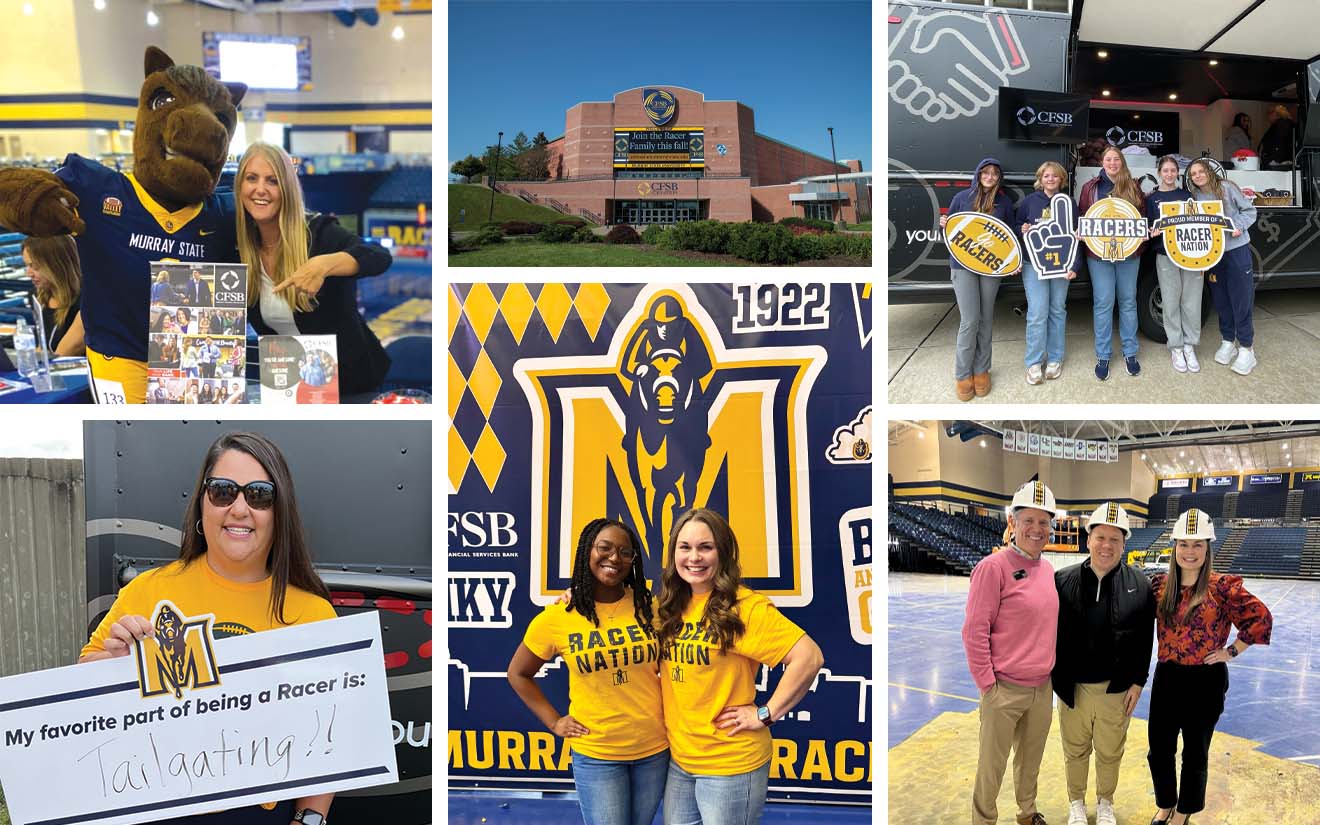
Community Banks Win Big with Sports Sponsorships
MarketingGrowth

How Community Banks Can Navigate Today's Risk Landscape
CybersecurityCompliance & Risk
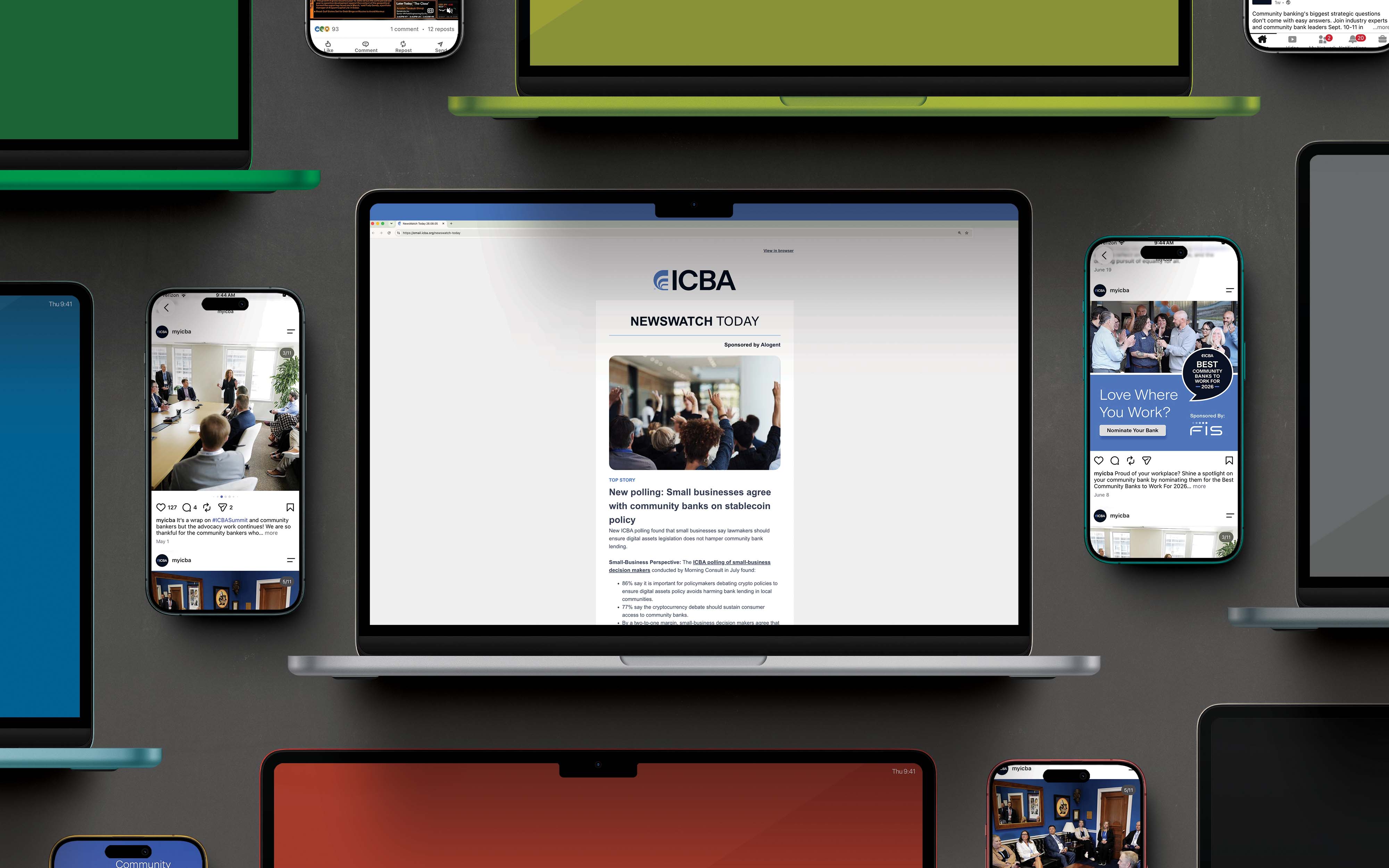
This Is How ICBA Keeps Community Bankers Informed
PeopleEducation and Training
Subscribe Today
Sign up for Independent Banker eNews to receive twice-monthly emails that alert you when a new issue drops and highlight must-read content you might have missed.
News Watch Today

Join the Conversation with ICBA Community
ICBA Community is an online platform led by community bankers to foster connections, collaborations, and discussions on industry news, best practices, and regulations, while promoting networking, mentorship, and member feedback to guide future initiatives.
Join the Community Example Text