CEO transitions are critical moments for community banks. Hear from new bank leaders on how listening, mentorship and steady communication help build trust and maintain stability during leadership change
Leading a Community Bank Through a CEO Transition
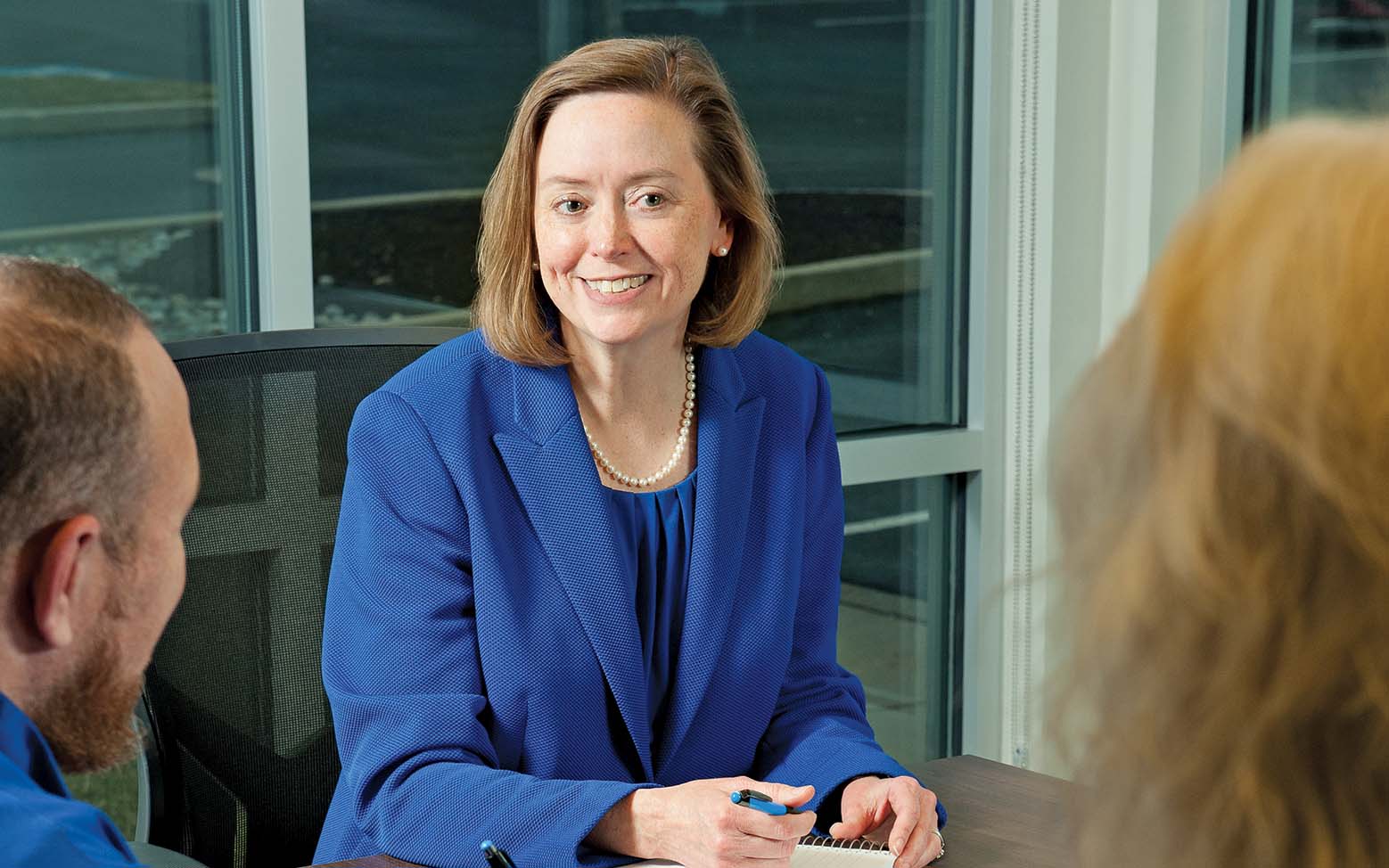
CEO transitions are critical moments for community banks. Hear from new bank leaders on how listening, mentorship and steady communication help build trust and maintain stability during leadership change
February 01, 2026 / By Bridget McCrea
CEO transitions are critical moments for community banks. Hear from new bank leaders on how listening, mentorship and steady communication help build trust and maintain stability during leadership change
New community bank CEOs step into the role with different backgrounds and timelines, but the transition brings similar challenges for everyone. Some follow long succession plans and already know the staff and culture. Others arrive from the outside and must learn a new market and team. Either way, responsibilities expand, decisions come faster and employees watch closely for signs of stability.
Leaders who successfully navigate this early period lean on a few consistent practices and strategies. They don their listening hats early, enlist experienced mentors, communicate often and give their teams steady guidance as they settle into the work. Many also build support outside the bank through peer relationships that help them test ideas and talk through problems.
These steps help new CEOs find their footing, set clear priorities and keep day-to-day operations on track.
Winning hearts and minds
25%
of community bank CEOs anticipate a leadership change in 2026.
Source: Independent Banker CEO Outlook
A long succession plan doesn’t remove the pressure of stepping into the top job. Internal successors also face a new set of expectations once they take the CEO seat.
Lauren Ranalli, president and CEO of $725 million-asset First Resource Bank in Exton, Pennsylvania, experienced that firsthand.
Ranalli helped launch the de novo as its founding CFO and spent 19 years working beside the community bank’s founding CEO before taking over on May 1, 2024. She quickly pivoted from “doing everything” to “overseeing everything,” which meant letting go of long-held responsibilities and relying more on her C-suite team. She says leaning on their expertise helped her adjust to the role and focus on what the bank needed most.
In the 90 days leading up to her predecessor’s retirement, Ranalli asked him to stay available but not step in. This gave her room to make decisions and mistakes without interference, while knowing the support was there if she needed it.
“I wanted to stand on my own while he was still here,” she says.
Ranalli paired that approach with steady communication to ease any concerns about sudden change and assure the team that no major changes were being made. She met with direct reports one on one and made a point to listen before weighing in. As Ranalli moved through the transition, she kept coming back to a principle she now shares with new hires and rising leaders.
“You can’t make progress until you win hearts and minds,” she says. “To me, that’s always job one.”
Getting up to speed
Christopher Caldwell, president and CEO of $1.25 billion-asset Community National Bank in Derby, Vermont, moved into the role after a full year of shared leadership with his predecessor. He spent 2024 taking on more operational and organizational responsibility while the outgoing CEO, Kathy Austin, stepped back, stayed present and created room for him to grow.
“She was amazing,” Caldwell says. “I just can’t say enough good things about her in the way that she handled that transition.”
Specifically, Caldwell was brought into decisions early, asked to participate in discussions (even when the prior CEO could have handled them herself) and encouraged to spend more time with the board.
The setup gave Caldwell time to learn the work at the right pace and feel ready when he became CEO this past January. He also consults with two colleagues (one former CEO and one former CFO) monthly to talk through problems and ideas. He says that support matters, because the top role can feel isolating in any organization.
“This can be a very lonely job,” he says. “You need a confidant who understands what you’re dealing with, and you may not always find that inside your own organization.”
Mindset over mechanics
More from ICBA
Check out the on-demand webinar “Preparing Today for Community Bank Leadership Tomorrow.” Learn more and register at icba.org/education
New CEOs often discover the job feels very different once they’re in the chair. That’s why Wendell Bontrager, CEO at $229 million-asset Sonata Bank in Brentwood, Tennessee, focuses on mindset over mechanics. After decades in banking and several leadership transitions, he’s seen how easily leaders can misread what their stakeholders expect.
Bontrager’s first rule is simple: Know every constituent and build those relationships early. This is critical, because shareholders, board members, employees, clients and regulators all see the bank through different lenses.
“It’s your responsibility to lead the way with every one of those constituents,” he says.
He also urges leaders to “walk a mile in the other person’s shoes.” Strong listening and direct conversations help avoid misalignment before it becomes a problem. Good two-way communication is equally important, as echoed by all the leaders interviewed for this article.
“You really can’t communicate enough in this role,” Bontrager says. “And if you stay proactive, you can stay ahead of the circumstances instead of reacting to them.”
Bridget McCrea is a writer in Florida.
Subscribe now
Sign up for the Independent Banker newsletter to receive twice-monthly emails about new issues and must-read content you might have missed.
Sponsored Content


Featured Webinars


Join ICBA Community
Interested in discussing this and other topics? Network with and learn from your peers with the app designed for community bankers.
Related Articles



Inside ICBA Community: the Peer-to-Peer Forum for Community Bankers
PeopleEducation and Training

Subscribe Today
Sign up for Independent Banker eNews to receive twice-monthly emails that alert you when a new issue drops and highlight must-read content you might have missed.
News Watch Today

Join the Conversation with ICBA Community
ICBA Community is an online platform led by community bankers to foster connections, collaborations, and discussions on industry news, best practices, and regulations, while promoting networking, mentorship, and member feedback to guide future initiatives.
Join the Community Example Text