With penny production ending, community banks must address rounding policies, teller training and system updates. Here’s how banks can manage the operational impact and support customers.
How Will the End of the Penny Affect Community Banks?
With penny production ending, community banks must address rounding policies, teller training and system updates. Here’s how banks can manage the operational impact and support customers.
February 01, 2026 / By Colleen Morrison
With penny production ending, community banks must address rounding policies, teller training and system updates. Here’s how banks can manage the operational impact and support customers.
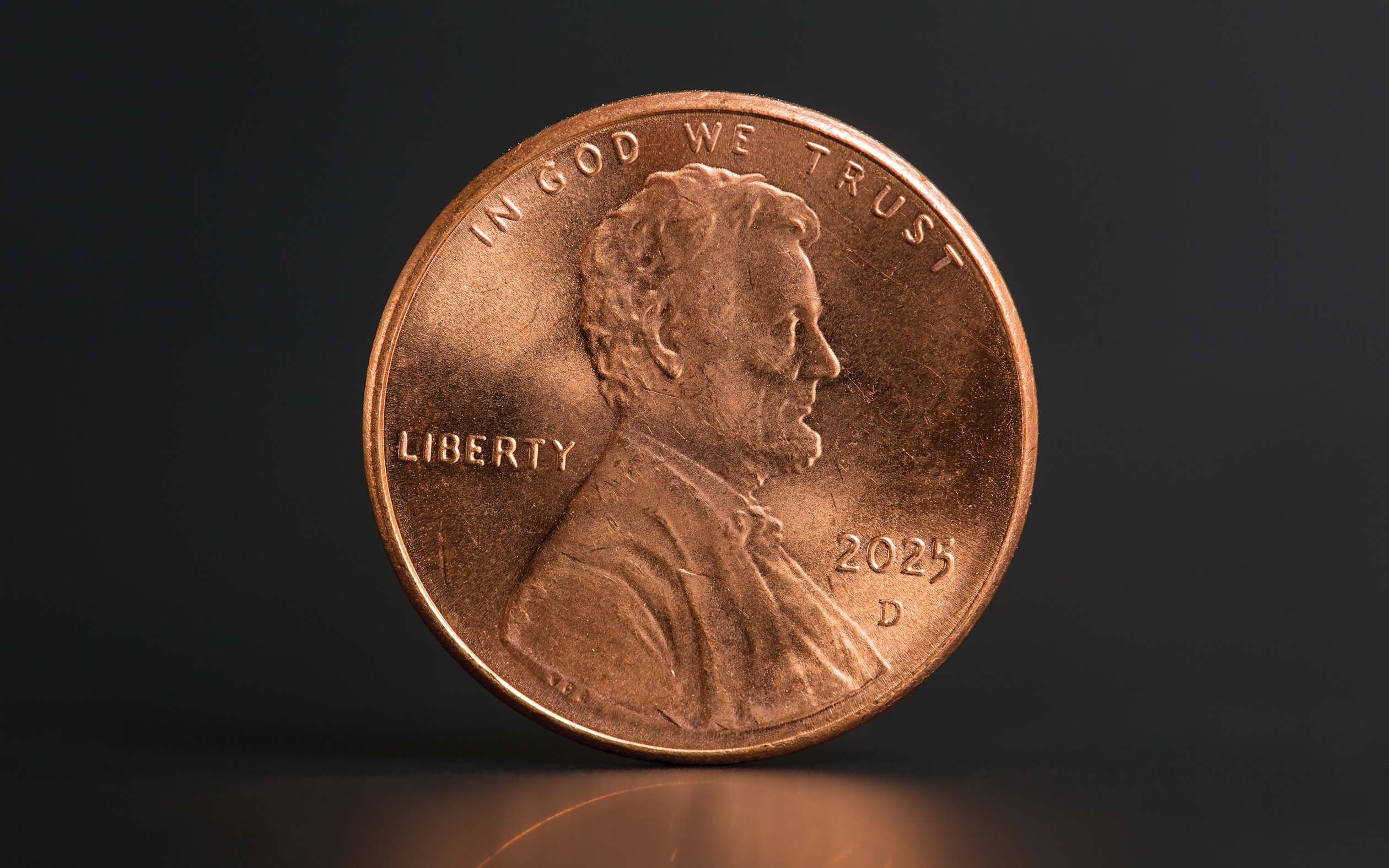
On Nov. 12, 2025, the United States officially ceased production of the one-cent piece, the penny.
According to the U.S. Mint, “The decision was influenced by the rising cost of producing the penny, which has increased 1.42 cents to 3.69 cents per penny.” The ending of one-cent coin production will save the U.S. Treasury upwards of $56 million annually.
“It’s been discussed for a good 20 years or longer to discontinue the penny,” says Kari Neckel, vice president of payments and technology policy for ICBA. “It is heavy, it costs a lot to move around, and for the most part, the penny seems to only be used to give consumers change.”
Global similarities
The U.S. isn’t alone in terminating production of its lowest-denomination coin. Back in 1992, Australia ousted one- and two-cent coins. In 2012, Canada nixed its penny, and Sweden got rid of its one öre back in 1972. Across the board, many countries have limited production to account for rising costs.
“As inflation happens, there have been other countries that recognized the savings that they would have and have gotten rid of their smallest denominations just to adjust,” Neckel explains.
The economics of rounding
While the U.S. Mint will no longer be producing pennies, they remain legal tender. With an estimated 300 billion in circulation, they will continue to appear in banks, cash registers and wallets. Therein lies the conundrum for community bankers: how to account for penny-based cash transactions.
“It seems like such a small economic thing, and probably for most people, it is, but it could cause headaches,” says Lance Noggle, senior vice president of operations and regulatory counsel for ICBA. “Community banks have to introduce training for staff, reprogram point-of-sale systems, decide how they will round and then address those issues with their core. So, there are lots of little issues.”
Fortunately, an analysis conducted by the Federal Reserve Bank of Atlanta using data from its 2024 Survey and Diary of Consumer Payment Choice, found that 72% of cash payments already end with “0,” indicating the majority of transactions won’t need to be addressed.
But even with less than a third of cash transactions affected, a cash-rounding strategy remains a key consideration for community banks and their customers. Community banks need to address teller-line transactions, and businesses and consumers need clarity on how to manage cash at the point of sale. All audiences are also seeking certainty as to whether transactions will be rounded up or down to zero, five or 10 cents.
“The problem is without really clear guidance, there will be different ways that people do this,” Noggle says. “When you write a check, and someone comes in to cash the check, you need a policy if you’re going to round up or round down, so that people know how it’s going to happen.”
The symmetric rounding rule
According to the aforementioned Atlanta Fed summary, there are no official rounding rules in the U.S., but the “symmetric” rounding rule may provide guidance.
In this model, cash payments ending with one and two pennies are rounded down to zero pennies; those ending with three and four pennies are rounded up to five pennies; payments with six and seven pennies are rounded down to five pennies; and those with eight and nine pennies are rounded up to 10 pennies.
The Atlanta Fed’s review concluded that this approach has a negligible impact on the bottom line, stating, “The cash inflationary impact is not statistically different from zero under symmetric rounding.”
Seeing the possibilities in this change
While community banks know that there are plenty of details to consider as pennies become scarcer (see sidebar), this development also creates a short-term window of opportunity to introduce efficiencies, drive digitalization and target new customers.
“Consider if this is an opportunity to update and change anything else to make operations more efficient,” Neckel says. “If you’re cashing checks, is this an opportunity to get those people banked at your institution? ACH is more efficient than checks, so what can you do to find efficiencies in your system to best move funds for your customers?”
3 tips for addressing the end of penny production
Create a rounding policy for teller transactions, and provide business customers with direction on how to address pennies at the point of sale.
Work with core providers to update teller systems in line with your policy. “So, for whatever teller software you have, it can do whatever scheme you want to do automatically, as opposed to the teller having to manually do things,” says Lance Noggle, senior vice president of operations and regulatory counsel for ICBA.
Consider limiting consumer penny sales to provide them to business customers. This simply makes them more available for those that will need them most.
Colleen Morrison is a writer in Maryland.
Subscribe now
Sign up for the Independent Banker newsletter to receive twice-monthly emails about new issues and must-read content you might have missed.
Sponsored Content

Featured Webinars


Join ICBA Community
Interested in discussing this and other topics? Network with and learn from your peers with the app designed for community bankers.
Related Articles
Examiner-Ready CECL: What the OCC's 2026 Handbook Update Changes
BankingEducation and Training

What 1,100 Consumers Told Us About Banking
Digital BankingIndustry Outlook


Portfolio Management: What the Bond Yield Curve Mean Reversion Means for Banks
GrowthInvestment and Insurance
Subscribe Today
Sign up for Independent Banker eNews to receive twice-monthly emails that alert you when a new issue drops and highlight must-read content you might have missed.
News Watch Today

Join the Conversation with ICBA Community
ICBA Community is an online platform led by community bankers to foster connections, collaborations, and discussions on industry news, best practices, and regulations, while promoting networking, mentorship, and member feedback to guide future initiatives.
Join the Community Example Text